First Impressions
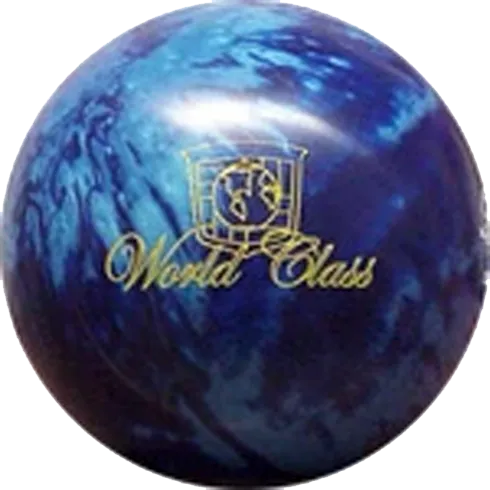
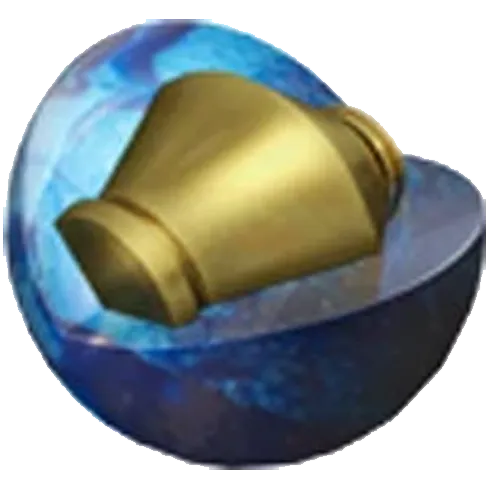
The Lane Masters World Class belongs to the World Class line and appears on official approved-ball lists with a January 2006 date; the available sources do not document a separate exact retail launch date. Visually, it combines Royal and Sapphire and represents the classic particle-solid construction of its era. The cover is listed as World Class Particle or Particle Solid, with a factory Sheen finish. Inside is a 2-piece construction, and the available specification databases do not list an intermediate differential. The archived sources agree on a differential of 0.035, but they differ on RG: 123Bowl lists 2.576, while BallReviews lists 2.611. Because the surviving sources do not clearly tie that discrepancy to a specific weight or measurement convention, the two values should be treated as source-specific rather than combined into a single assumed figure. Documented weights are 14 through 16 lb. The combination of a particle-solid cover, Sheen surface and medium differential points toward controlled traction and a smoother overall shape rather than a pronounced skid/flip reaction. Archived motion descriptions place the ball mainly on medium to higher oil volumes and characterize it as reading relatively early, building in the midlane and producing a controlled, continuous Hook.
Comparison Analysis
Compared directly with the Lane Masters World Class Reactive, the original Lane Masters World Class is designed to create traction sooner. The Lane Masters World Class Reactive uses a reactive cover with a polished surface and is listed at an RG of 2.585 with a 0.035 differential. That combination should allow it to clear the front more easily and produce its directional change farther downlane, while the original World Class uses its particle-solid cover to pick up earlier and read the midlane more strongly. Historical comparison material also places the Lane Masters World Class Reactive below the original in total Hook while giving it a more defined breakpoint. The Lane Masters World Class Particle Pearl follows a similar complementary concept: its particle-pearl cover, 2.570 RG and 0.035 differential combine with a polished or Sheen-type finish to provide more length and a stronger response to Friction than the original World Class. The original ball therefore gains its value less from creating maximum entry angle and more from control, steady energy transfer and a more predictable shape in oil. When it encounters dry boards too early, however, the cover can use energy prematurely and reduce continuation through the pins.
Practical Application
The Lane Masters World Class fits best on fresh conditions with medium to moderately heavy oil when the goal is to create traction before the breakpoint and maintain a controlled path to the pocket. On sport patterns and more demanding tournament conditions, that smoother shape can be useful because the ball does not require a large dry zone to create an abrupt move. Archived motion descriptions show a strong midlane presence and an even, controllable move toward the breakpoint, while also indicating that excessive early Friction can cause the ball to use energy too soon. Higher-speed players can benefit from the factory Sheen surface when they need additional midlane read, while lower-speed or higher-rev players need to watch for the ball reading too early. As Transition develops and the front becomes noticeably drier, moving to the Lane Masters World Class Reactive or another cleaner pearl/reactive option is the more logical progression. Its 0.035 differential supports visible but not extreme flare, making the ball better suited to controlled angles and stable lines than to very deep inside lines that require a late, sharp change of direction. In practical terms, the World Class is primarily an oil-control piece: predictable Hook, steady midlane motion and a shape intended to create Carry through positioning and continuous energy rather than a violent backend response.