First Impressions
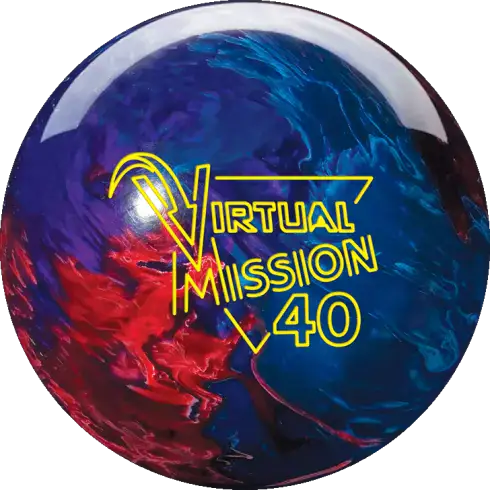
The Storm Virtual Mission 40 presents itself as a standout option in your arsenal for demanding conditions. Built around the Mission 1.0 core, this ball delivers an extremely stable foundation for heavier oil patterns with a 2.49 RG and a 0.050 differential (intermediate differential: 0.013). The hybrid reactive cover provides outstanding traction in the early phase of the lane. Thanks to the factory 1500-grit polished surface, the ball reads the heads very early and develops consistent rotation through the midlane. Visually it is very attractive and immediately signals its focus on heavy oil and maximum control. The combination of an asymmetric design and this strong cover means this ball loses hardly any energy in the pocket and shows an impressive presence.
Comparison
Compared directly to the Storm Nova, the Virtual Mission 40 shows a noticeably calmer and more controlled reaction. Where other asymmetric models often react too aggressively to the transition, this ball maintains a consistently predictable path. The Storm Nova does offer a bit more length through the first two thirds of the lane, but it lacks the sheer traction the Virtual Mission 40 builds through the boards. If you find the Nova too jumpy, you'll find the stability and predictability you need here. It forgives release mistakes better than comparable strong balls, yet still keeps the power needed to clear the pins extremely effectively. It shows its undeniable strengths especially on changing conditions.
On the Lanes
For practical use on the lane, this ball is best suited to long, high-volume oil patterns. When the heads are oiled up enough, it can reach its full potential and delivers a continuous hook toward the pocket. It picks up the friction at the end of the oil pattern smoothly but decisively, which leads to outstanding carry. If you throw the ball fast, this is the perfect choice for hitting the pocket safely and repeatably. If the lane dries up as the session goes on and the transition sets in, it's wise to plan a ball change early, since it may react too soon on dry boards. It is an excellent ball for wet conditions that fully lives up to modern performance expectations and should consistently produce high scores.