First Impressions
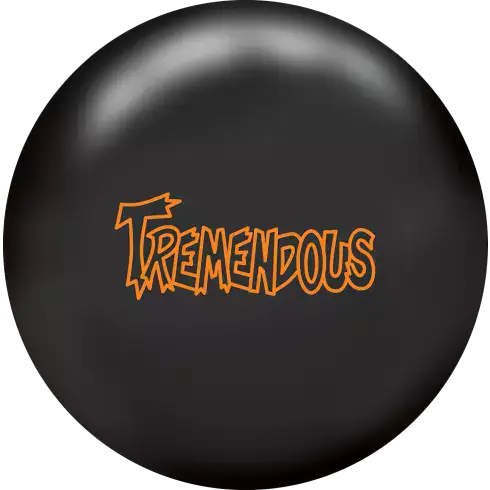
The Radical Tremendous was released in July 2017 as a technological tribute to one of the most successful balls in the brand's history. Visually, the ball shows up in an aggressive solid color combination of black and orange. The technical highlight is the return of the famous Guru core, though in a decisively modified version: the Guru Symmetric Core. This core does without the finger-joint modification that made the original asymmetric, but keeps the massive density and dynamics. In a 15-pound ball it delivers a very low RG of 2.483 and a strong 0.050 differential. This powerhouse is wrapped in the Ai-30 Solid Reactive coverstock. The surface ships from the factory with a very coarse finish of 500 and 1000 Siaair Micro Pads. This combination of a low-RG core and a coarse surface signals unmistakably that this ball was built for early traction and lots of hook across the full width of the lane.
Comparison
In comparison, the Radical Tremendous closes the gap between the extreme asymmetrics and the weaker symmetric balls. Directly against the original Radical Guru, the Tremendous shows a similarly strong overall motion, but the transition at the breakpoint is noticeably smoother and less abrupt, since the symmetric construction takes some of the edge off the snap. Compared to the Storm Phaze II, a direct competitor among symmetric solid balls, the Tremendous often gets into the oil even a bit earlier thanks to the 1000 finish out of the box and generates more friction in the heads, while the Phaze II offers a little more length. Against the Radical Xeno, which is also symmetric, the Tremendous is a clear upgrade in terms of total hook; it covers more boards and is more forgiving in oil, since it isn't as sensitive to over- or under-reaction.
On the Lanes
The ideal application for the Radical Tremendous is medium to heavy oil patterns. It's a classic traction ball, the one you need when the lane is freshly oiled and other balls still slide too far. Thanks to the aggressive surface it practically digs its way through the oil and provides a very stable roll phase in the midlane. If you throw the ball fast, it's an excellent choice, because it slows down early enough to reach the pocket reliably. If you have a high rev rate, you'll benefit from the controllability of the symmetric core: the ball reads the lane early, but doesn't make unpredictable jumps at the end, which increases carry on less-than-perfect hits. Once the heads start to dry up (transition), however, the ball should be polished or swapped out, since otherwise it loses too much energy before it reaches the pins.