First Impressions
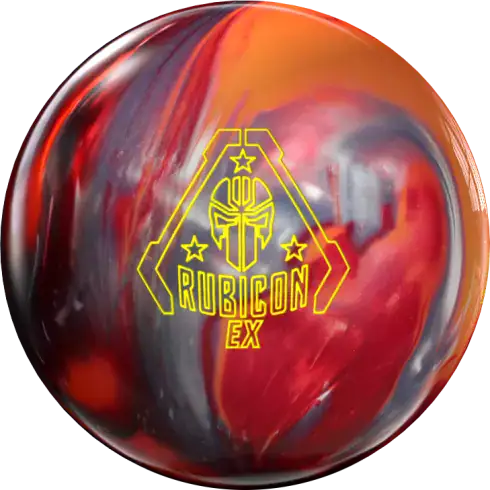
The Roto Grip Rubicon EX comes with an eTrax-P20 Pearl Reactive coverstock in Fire Red/Silver/Orange and uses the proven asymmetric Rondure Core, developed specifically to amplify ball motion down the entire lane. The surface is polished to 1500-grit out of the box, which allows for a longer skid phase and stronger backend motion. The core features a low RG design with a small intermediate split that mimics the motion of symmetric cores with balance hole characteristics. This construction should deliver increased midlane activation combined with stronger backend motion compared to traditional asymmetric designs.
Comparison
The Rubicon EX positions itself as the pearl version in the Rubicon family and clearly separates itself from its solid counterpart, the original Roto Grip Rubicon with the eTrax-S20 solid cover. The eTrax Pearl coverstock technology can easily be sanded or polished to handle different lane conditions without losing traction and responsiveness. Compared to stronger asymmetric balls like the Roto Grip UFO with its MicroTrax solid cover, the Rubicon EX offers a longer skid phase through its pearl surface while keeping the backend motion controlled. The smaller intermediate differential produces continuation closer to symmetric designs and makes the ball a bridge between asymmetric and symmetric core designs.
On the Lanes
The Rubicon EX is a good fit if you're looking for a controlled asymmetric reaction with pearl characteristics. With high flare potential it appeals to both intermediate and advanced bowlers playing medium to fresh oil conditions. The polished surface makes it the ideal choice for situations where the original Rubicon would grab too early. Tweeners and power players benefit from the asymmetric core dynamics, which still deliver enough backend reaction as lane conditions break down. The ball works especially well as a transition ball when stronger solid equipment gets too aggressive but symmetric pearl balls don't provide enough core dynamics. Its versatility also shows in how adaptable the surface is — it can be modified as needed for different oil volumes and friction levels.