First Impressions
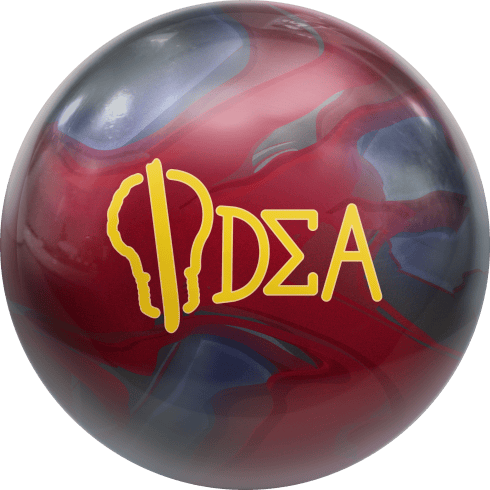
The Big Bowling Idea comes with the asymmetric F.R.E. Response Core and the EP5 Reactive Cover in a pearl version, featuring a 2.495 RG, a 0.045 differential and a 0.017 intermediate differential at 15 pounds. The Forward Rolling Ellipses Response Core technology should deliver very smooth and even ball motion in order to control wet/dry situations and create readable ball reactions for easy lane interpretation and clean games. The EP in the EP5 Reactive coverstock stands for "Early & Predictable," with a hook rating of 5 on a scale from 1 to 10. The asymmetric construction combines medium RG values, medium differential and a semi-strong Preferred Spin Axis for balanced ball motion, though this ball is now classified as "Retired" and is no longer produced by the manufacturer.
Comparison
The Idea positions itself as a benchmark ball for medium lane conditions and, thanks to the continuous motion of the F.R.E. Response Core, should be particularly convincing on changing lane conditions. Compared to more aggressive balls like the Storm Phaze II or the Motiv Jackal Ghost, it offers a more predictable, less angular reaction. Its sister version, the Solid Idea with E8 Reactive Cover, was designed as an "oil-hungry beast" for heavier conditions. The pearl version of the Idea, on the other hand, lacks the early traction on heavy oil, which makes it better suited to medium to slightly reduced oil volumes. Against classic house shot balls like the Brunswick Rhino or Ebonite Maxim, it promises noticeably more versatility while keeping backend reactions controlled.
On the Lanes
The Big Bowling Idea is aimed at players looking for a reliable ball for medium lane conditions who value smooth, predictable reactions. Because of its continuous motion, it is especially suited to bowlers who struggle with inconsistent wet/dry areas and need better readability of the lane. If you're rev-dominant, you'll benefit from the controlled energy of the asymmetric core, while speed-dominant bowlers will appreciate the predictable hook progression. On typical house shots it should provide solid performance in boards 10-15, and on longer sport patterns it can serve as a transition ball. The hook rating of 5 on the manufacturer's scale positions it ideally for players who prefer neither overly aggressive nor overly tame ball reactions, but are looking for medium intensity with high predictability.