First Impressions
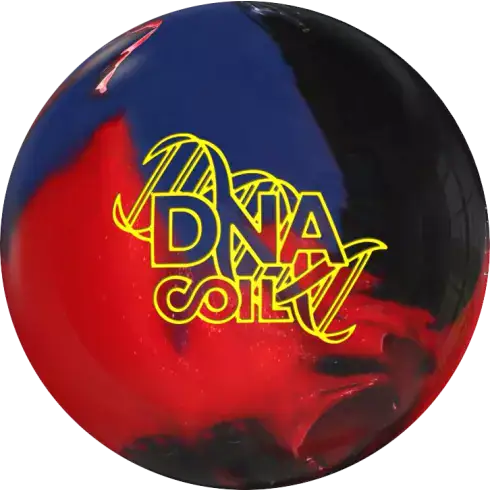
Released in March 2024, the Storm DNA Coil shows up in a striking color mix of Scarlet, Persian Blue and Raven (red/blue/black). As a direct evolution of the original DNA, this model uses the same asymmetric Supercoil core, but pairs it for the first time with the EXO Pearl reactive cover. Technically, the ball is defined by a very low RG of 2.47 and a high differential of 0.053 (at 15 lbs). This combination of a very driving, early-revving core and a polished pearl surface (Reacta Gloss finish) aims to fill a gap: the ball should retain the aggressive midlane read of the solid, but generate more length through the heads thanks to the pearl material. The signature Storm scent for this model is "Orange Pineapple Slush".
Comparison
Compared directly to its predecessor, the Storm DNA (solid cover), the DNA Coil creates noticeably more length and a sharper move at the breakpoint. Where the original DNA often digs in early, the Coil stores more energy for the back part of the lane. An important reference point is Storm's Virtual Energy Blackout: the DNA Coil reads the lane earlier and comes across as rounder and more controlled overall than the extremely angular Virtual Energy Blackout. Against products from other manufacturers, such as the Attention Star from Roto Grip, the DNA Coil positions itself as the slightly earlier-revving and "heavier rolling" option. It doesn't quite offer the extreme skid-snap of a typical shiny pearl, but rather a controlled aggressiveness once it hits friction.
On the Lanes
The ideal use case for the Storm DNA Coil is medium to heavy oil conditions, especially when the lane is in transition. Thanks to the strong core, it works very well if you need help getting the ball into a roll but at the same time want to avoid the ball losing energy too early. When dull solids start hooking too early or look "dead," the DNA Coil should provide the length needed through the heads without missing the pocket. For rev-dominant players it often offers enough control not to jump uncontrollably off the backend, while speed-dominant players benefit from the support of the low-RG core to get the ball rotating in time. It frequently serves as the first ball change when the "benchmark" ball (such as a Phaze II) reacts too early.