First Impressions
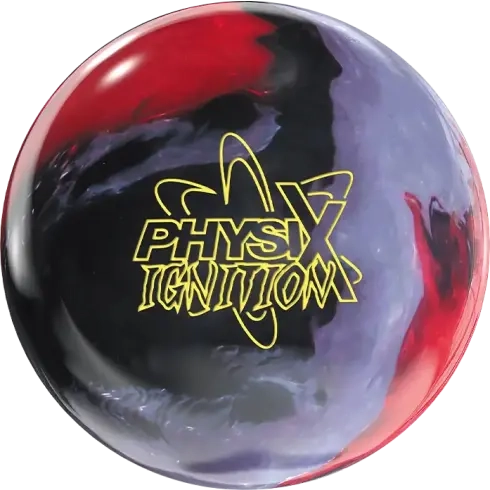
The Storm PhysiX Ignition is an international overseas release from November 2026, featuring a distinct color combination of black, red, and gray paired with a strawberry fragrance. Technically, the ball is built around the asymmetrical Atomic A.I. core, which delivers a low RG of 2.47, a high differential of 0.055, and an intermediate differential of 0.018 at 15 pounds. Wrapping this weight block is the R2S Deep Solid Reactive coverstock, finished out of the box with the polished Power Edge surface. By pairing a high-torque asymmetrical core with a shiny solid cover formulation, this release aims to balance clean length through the front part of the lane with an assertive response downlane.
Comparative Analysis
Within the manufacturer's lineup, the Storm PhysiX Ignition offers a noticeably cleaner look than earlier entries such as the original Storm PhysiX or the Storm Proton PhysiX. Whereas those predecessors utilized sanded finishes and stronger NRG or NeX coverstocks for early traction in heavy oil, the Storm PhysiX Ignition relies on R2S Deep Solid combined with Power Edge polish. Designed to delay energy expenditure, this cover clears the front of the lane much easier than benchmark sanded solids like the Storm Phaze II. At the same time, the asymmetrical Atomic A.I. core generates substantially more flare potential and downlane angle than symmetrical R2S offerings such as the Storm Hy-Road. Compared to shiny pearl options in the same family like the Storm Infinite PhysiX, the solid base chemistry is intended to provide slightly steadier mid-lane friction while retaining strong backend recovery.
Practical Application
In practical play, the Storm PhysiX Ignition is well suited for medium oil patterns and conditions experiencing lane transition, particularly when dull asymmetrical balls begin hooking too early. The Power Edge factory finish on the R2S Deep Solid cover is engineered to preserve axis rotation through the front before allowing the low-RG Atomic A.I. core to rev up cleanly in the mid-lane. This motion is designed to create a sharp entry angle into the pocket and sustain strong pin carry as lanes break down. Balanced and speed-dominant bowlers can utilize the ball's responsive backend to attack the pocket on medium volumes without over-skidding, while rev-dominant players can move deeper inside on the boards and rely on the clean front-end clearance to maintain downlane continuation.