First Impressions
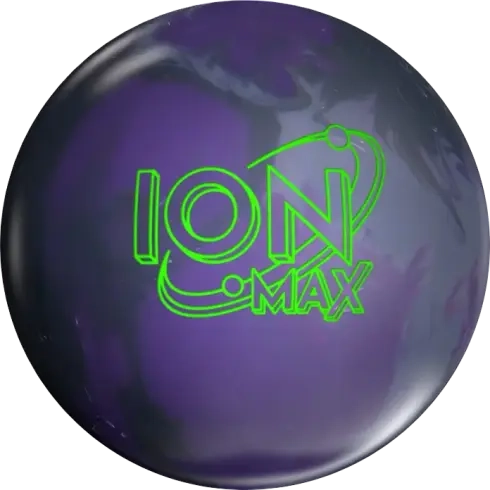
The Storm Ion Max Veil is an international overseas release from October 2026, featuring a sleek, understated color scheme of violet, carbon, and black paired with a Cherry Apple Splash fragrance. Technically, the ball is built around the asymmetrical Element Max A.I. core, which delivers a low RG of 2.47, a high differential of 0.055, and an intermediate differential of 0.014 at 15 pounds. Wrapping this core is the NRG Smooth Solid Reactive coverstock, finished out of the box at 4000-grit Abralon. By pairing a high-torque asymmetrical weight block with a comparatively cleaner solid cover, the design aims to balance smooth readability in the front part of the lane with an assertive response downlane.
Comparative Analysis
Compared to the original Storm Ion Max, which utilizes the stronger NRG Solid coverstock at a 2000-grit finish for maximum early traction, the Storm Ion Max Veil is noticeably cleaner through the front of the lane. While the Storm Ion Max is engineered to dig into heavy oil early, the Storm Ion Max Veil preserves more energy thanks to its 4000-grit factory surface and NRG Smooth Solid formulation, resulting in a sharper, more pronounced motion at the breakpoint. The NRG Smooth Solid cover was previously featured on the Storm Marvel Max 1 and Storm Marvel Max 2, where it became known for controllable mid-lane read, though it is paired here for the first time with the Element Max A.I. core. Relative to the symmetrical Storm Ion Pro, the Storm Ion Max Veil generates substantially more flare potential and overall hook due to its asymmetrical core design, yet remains easier to manage when friction builds up than traditional dull asymmetrical solids.
Practical Application
In practical play, the Storm Ion Max Veil is best suited for medium oil patterns and conditions experiencing lane transition. The interplay between the low-RG asymmetrical core and the cleaner solid cover is designed to create steady friction in the mid-lane while retaining enough axis rotation for strong continuation into the pocket. This setup is intended to enhance pin carry when bowlers need to move deeper inside on the boards without sacrificing downlane recovery. Rev-dominant players and two-handers will find this motion useful when stronger solid balls begin hooking too early in the front, as the cover allows the ball to clear the heads smoothly. At the same time, speed-dominant bowlers can rely on the core's strong differential to produce a predictable, continuous hook shape on medium volumes without over-skidding past the breakpoint.