First Impressions
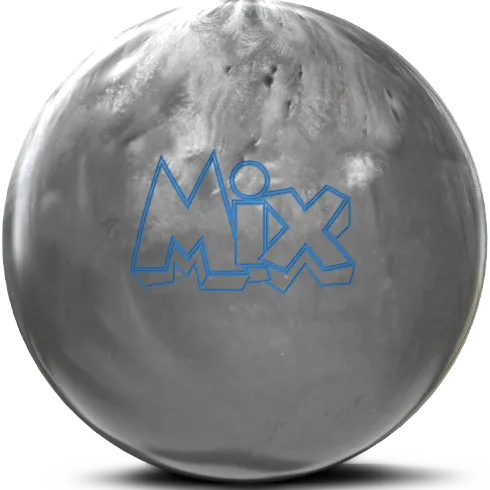
The Storm Mix was introduced in July 2013 as a versatile addition to the lineup and fills the niche between pure polyester and mild urethane. The look is kept simple, while the cover consists of a special urethane blend finished at the factory with a 3500-grit polish. Inside sits the proven symmetrical Traditional 3-Piece Core, which provides a calm and predictable ball motion. The specs at 15 pounds show an RG of 2.69 and a very low differential of 0.006. This combination results in a ball built for minimal friction and extremely low flare potential, with the urethane material promising slightly better durability and improved bite on the surface compared to conventional plastic.
Comparison
Compared to a classic polyester ball such as the Storm Ice Storm, the Storm Mix offers a somewhat more controlled motion on the backend thanks to its urethane shell. Where pure plastic can often slide uncontrollably, the urethane of the Mix provides a more subtle interaction with the friction. Set against a performance urethane ball like the Storm Pitch Black, it becomes clear that the Mix generates considerably less total hook and reacts noticeably later to the transition. Compared to a weak entry-level ball with a reactive cover, such as the Storm Tropical Breeze from the same era, the Mix shows a far straighter path without the typical change of direction at the end of the oil pattern. It thus acts as a bridge for bowlers who find polyester too slick and reactive material already too lively on dry boards.
On the Lanes
The ideal use case for the Storm Mix is spare shooting, especially on difficult spare leaves. It is aimed at all player types looking for a reliable ball to the pocket when the lanes are extremely dry or when an absolutely straight path to the pins is required. Thanks to the urethane surface, it generates somewhat better carry on spares than conventional plastic balls, since it is less prone to deflecting off the pins. On very short oil patterns or extremely burned-up heads it can also be repurposed as a strike ball in order to avoid an overreaction on the backend. It gives bowlers with a high rev rate the control needed to play the pocket without big detours. Its robust construction makes it a long-lasting companion for any bowler who values precise repeatability of his shots, regardless of the transition on the lane.